
Case Study Deep Dive: Apium Delivery — Scaling Same-Day Grocery Logistics with Custom Software
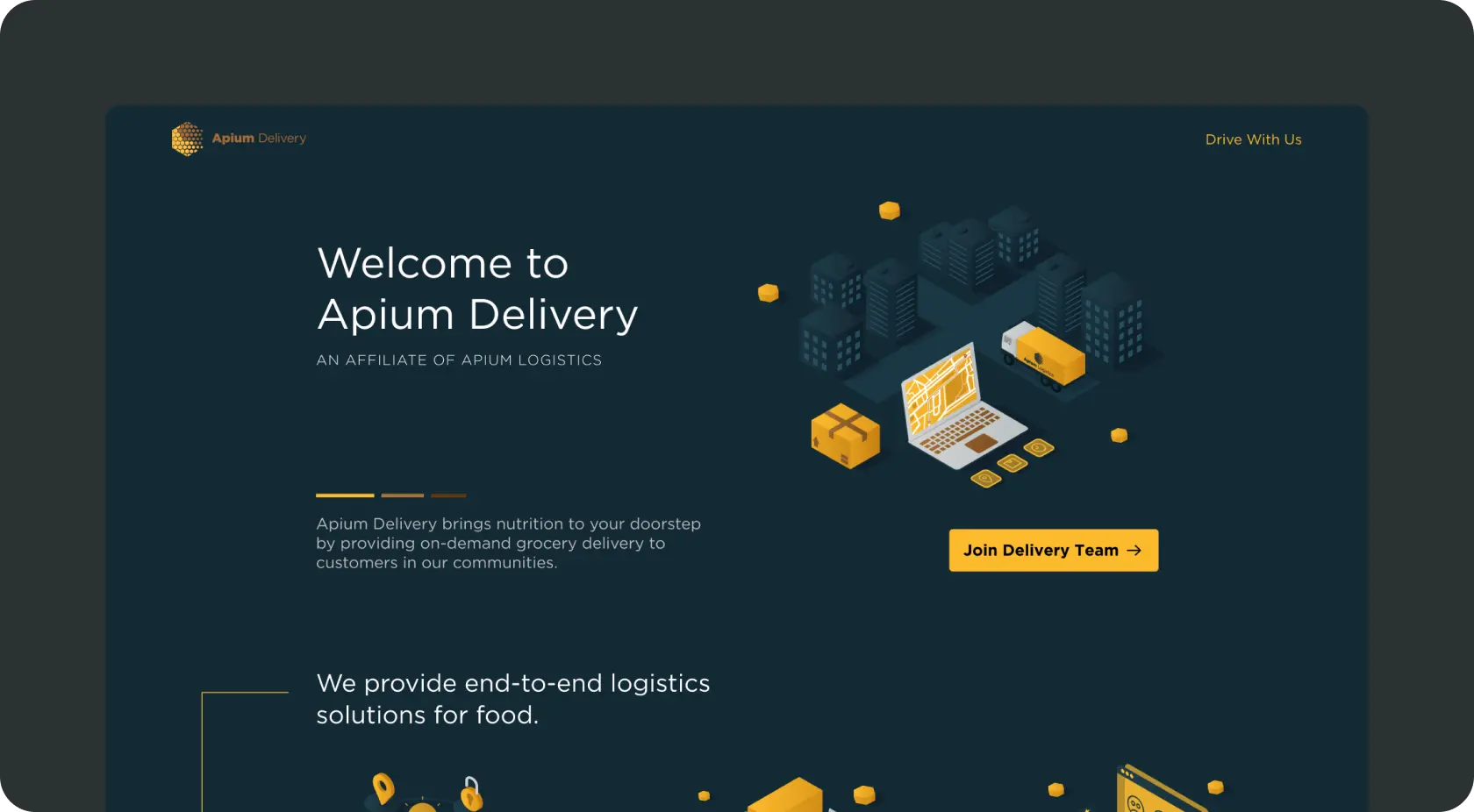
When grocery delivery demand surged during and after COVID-19, Apium Delivery (operated by Raley’s) faced a pressing challenge: how to scale operations while maintaining freshness, speed, and customer trust. Synaptech partnered with them to build a custom platform to optimize logistics, fleet management, and driver coordination. The results — 40% faster deliveries, 95% customer satisfaction, and 20% improved fleet efficiency — speak for themselves. Here’s how we did it.
Background & Challenge
Apium Delivery was already a recognized name in grocery delivery across California and Nevada, but the pandemic cracked open new demand and exposed gaps in their system. They urgently needed to handle:
-
Real-time route optimization across a wide geography
-
Special handling of perishable items (temperature, timing)
-
Driver management and engagement to ensure reliability
-
Maintaining quality and consistency under scaling pressure
Existing systems were stretched thin. Off-the-shelf logistics tools couldn’t handle the domain-specific constraints of grocery (timing windows, perishables, freshness). Apium needed a tailored solution — not a generic logistics product.
Synaptech’s Approach & Solution
We designed a modular, scalable platform focused on performance, flexibility, and real-time responsiveness. Key components included:
-
Fleet Management & Scheduling: A backend system to allocate delivery tasks dynamically across the fleet, balance load, and adjust to real-world conditions (traffic, delays).
-
Real-Time Route Optimization: Algorithms to compute shortest, fastest, freshest routes — factoring in delivery windows and constraints on perishable goods.
-
Custom Delivery Parameters: Each grocery order might have special handling requirements (cold chain, fragile items, timed slots). The system allowed these parameters and optimized accordingly.
-
Driver Engagement & Interface: A driver app that delivered real-time task updates, route changes, and performance feedback. Balanced workload and minimized idle time.
-
Monitoring & Analytics: Dashboards for management to monitor KPIs: on-time rates, delivery times, driver efficiency, satisfaction metrics.
We ensured the platform was flexible enough to evolve: new regions, more drivers, new constraints, and even integrations with other systems (inventory, point of sale, customer apps).
Results & Outcomes
After deploying the new system, Apium Delivery achieved:
-
40% Improvement in Delivery Speed — thanks to optimized routing and dynamic re-routing logic
-
95% Customer Satisfaction — consistently delivering fresh groceries on time, creating repeat customers
-
20% Increase in Fleet Efficiency — fewer delays, better utilization of drivers and resources
These gains translated into growth: Apium could reliably expand, take on more volume, and maintain quality as they scaled.
Key Lessons & Takeaways
-
Domain-specific constraints matter. A generic logistics engine can’t “just adapt.” Grocery delivery has unique freshness, timing, and perishables constraints that must be built into the system.
-
Real-time flexibility is essential. Traffic, delays, cancellations happen. Your system must dynamically respond — not stick to static routes.
-
Driver experience drives consistency. Engaged drivers who have clear instructions, efficient routes, and feedback perform better. The human side can’t be neglected.
-
Metrics must be visible. Measurement is not optional. Dashboards and analytics let management make informed decisions and spot issues quickly.
-
Start modular and evolve. The solution must support future expansion — new geographies, order types, integrations — without a full rewrite.
How You Can Apply This
If you run any operation that involves delivery, logistics, or real-time asset movement (food, retail, medical supply, field services), you can adopt the same principles:
-
Collect the constraints you can’t violate (time windows, temperature, modes)
-
Build routing systems that respect those constraints
-
Provide clear interfaces to human operators (drivers, dispatchers)
-
Monitor performance and iterate based on data
If you’re exploring a similar delivery or logistics challenge, Synaptech can help design and build the system you need. We’ve done it for Apium — and we’d love to solve it for you.
👉 Interested in a no-pressure assessment of your delivery or logistics workflow? Contact us and we’ll walk you through possible optimizations or prototypes.
Leave a Reply